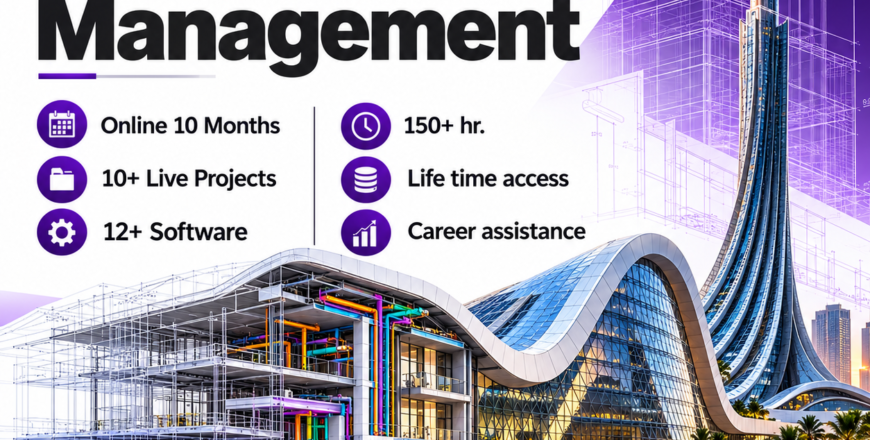
PG Program in BIM Management


- Description
- Curriculum
-
BIM Research and Study
-
Understanding BIM’s role as a data-driven technology in the AEC industry
-
BIM project phases:
• Plan – Use reality capture and data for project context models
• Design – Concept, analysis, documentation, and logistics planning
• Build – Fabrication and construction coordination
• Operate – BIM data carried into operations, maintenance, renovation, and deconstruction
-
-
BIM Modeling (Architecture, Structure & MEP)
-
Architecture data: planning, documentation, visualization, coordination
-
Structure data: 3D reinforcement modeling, detailed workflows, steel and concrete documentation, structural analysis export
-
MEP data: integrated design, interference detection, fabrication modeling, systems documentation
-
-
BIM Analysis
-
Tools: Revit and RWIND
-
Heat analysis
-
Solar analysis
-
Load analysis
-
Wind analysis
-
-
BIM Simulation
-
Tools: Naviswork
-
4D Simulation: real project timeline + clash detection
-
5D Simulation: cost timeline and project costing
-
6D Simulation: project lifecycle information
-
-
BIM Coordination (BIM 360 & BIM Collaborate-Pro)
-
Cloud-based collaboration and model coordination
-
Clash detection to catch errors early
-
Design collaboration tracking
-
Field team access via mobile models
-
-
Construction Project Management with BIM Application
-
Tool: Primavera P6
-
Covers full construction lifecycle: cost control, scheduling, procurement, risk assessment
-
Coordination with architects, owners, and contractors
-
-
BIM 4D & 5D with Project Management
-
Tool: BEXEL Manager
-
Advanced features for visualization, data management, clash detection, automated quantity take-off (QTO), cost management, smart scheduling and progress tracking
-
-
Data Visualization
-
Tool: Power BI
-
Create visual reports from multiple data sources
-
Advanced analysis with AI and reporting tools
-
Helps with smarter decision-making and data insights
-
-
Visual Programming
-
Tool: Dynamo
-
Establish visual and algorithmic relationships between drawing components
-
Workflow automation from concept to final design
-
-
Augmented Reality & Related Tech
-
AR (Augmented Reality)
-
VR (Virtual Reality)
-
Scan to BIM workflows
-
Rendering
-
Tool: V-RAY
-
Real-time digital camera views
-
Quick iterations with material and lighting exploration
-
Shareable project visuals
-
Common Data Environment
-
Tool: BIM 360
-
Single source of truth for project data and documentation
-
Facilitates collaboration and reduces duplication/mistakes